As of now, I'm a level 28 Pokemon trainer and my pokedex is up to 130 caught. I seem to be making pretty decent progress, so I thought I'd share some tips!
1. When you're first starting out, you need to level up. The best way to do this is the Pidgey/Weedle/Caterpie leveling trick. In case you aren't aware of it already, the idea is to capture a ton of Pidgeys, Weedles, and Caterpies, then mass evolve them, preferably with a lucky egg active. Evolutions are worth 500 xp a piece, and with the lucky egg active, they're worth 1000 xp. The reason you use these particular Pokemon is that they are absurdly common and only costs 12 candy to evolve. You can throw a few Ratatas in there too, but keep in mind that they cost 25 candy to evolve.
2. Once you start leveling up, it's time to make a decision on whether you want to try to capture as many Pokemon as possible, or if you want to get some strong Pokemon to hold gyms with. If you want to catch Pokemon, you're probably going to want to find a place with a lot of pokestops, and use lures to grab some commons and uncommons to start with. Once you have a decent amount of Pokemon, you're going to do the same thing gym fighters should do from the start: hatch eggs. In the long run, hatching eggs is the best way to get new Pokemon, get large amounts of candy and stardust, and get some of the best Pokemon to hold gyms with.
3. An important thing to keep in mind is that just because a Pokemon is common, doesn't mean it's bad. In addition to that, just because a Pokemon is rare, doesn't mean it's good. For instance, Bellsprouts and Oddishes are fairly common Pokemon, but their highest evolutions (Victreebel and Vileplume) are very powerful Pokemon. In the same vein, Pokemon like Onix, Jynx, and Chansey all come from 10 km eggs and are very difficult to find in the wild. However, they are trash when it comes to power.
4. The biggest reason you're going to want to hatch eggs is that most of the best gym Pokemon are rare Pokemon that are difficult to obtain unless you're hatching 10 km eggs. Even then, there's no guarantee you're going to get one, but it certainly increases your odds. It can also depend on where you live and where you collect Pokemon. For instance, where I live, Dratini's are difficult to find, so getting them from eggs is a more viable way for me to get them. Two of the best gym Pokemon, Snorlax and Lapras, are found in 10 km eggs as well.
5. When you first start trying to land some decent Pokemon in terms of power, try evolving Eevees. They are very common and Vaporeon is considered an S Tier Pokemon. It's the easiest S tier Pokemon to get, and getting multiples isn't a bad thing if you want to try to take on multiple gyms. Flareons are pretty good, too.
6. Curious about the best Pokemon in the game? Allow me to tell you which ones they are, in order, and the best way to get your hands on them.
Dragonite: These are the 3rd evolution of Dratini (Dratini - Dragonair - Dragonite). If you hunt Pokemon in an area where Dratini are common, this one shouldn't be that hard to get. If you don't, they hatch from 10 km eggs, with a nice helping of candy to go with them. It's not completely out of the ordinary to see a Dragonite out in the wild, either. I personally caught one.
Snorlax: I caught mine in the wild. They hatch out of 10 km eggs, but I haven't seen that happen yet. Considering you're probably going to want to power this one up, it would probably be better to get one out of an egg for the candy.
Lapras: I got mine out of a 10 km egg. They hold gyms really well. I haven't seen a single one of these in the wild.
Arcanine: This one isn't too hard to get. He's the evolution of Growlithe. If you live in an area where Growlithe's are common, just catch enough to get 50 candy. If not, still not that big of deal, as they drop from 5 km eggs.
Vaporeon: The easiest S tier Pokemon to get. It evolves from Eevee. Name your Eevee "Rainer" for a guaranteed Vaporeon! Strangely, Eevees hatch from 10 km eggs, but the plus side is that you get 25 candy with the egg for an instant evolution!
Exeggutor: This one was a pain for me to get. They are the evolution of Exeggcute. If you live somewhere where Exeggcute's are common, this shouldn't be too bad for you, but I don't seem them much. They hatch from 5 km eggs, but it took me some time to get enough of them for an evolution.
Gyarados: This one just sucks to get. It requires 400 Magikarp candy. Magikarp are very common near water, and pokestops with lures on them tend to bring a lot of them too. Magikarps hatch from 2 km eggs, but don't expect much candy from them.
Flareon: Another Eevee evolution. Name your Eevee "Pyro" for an guaranteed Flareon!
Muk: Muk is the evolution of Grimer. I can't help too much here as I have yet to find either one of these Pokemon, and they're known for being hard to find. Grimer hatches from 5 km eggs, but I haven't gotten one yet.
Slowbro: The evolution of Slowpoke. Slowpokes are pretty much everywhere in my chosen Pokemon hunting ground, so this one was pretty easy to get. Slowpokes hatch from 5 km eggs, and I've gotten quite a few of them that way, too.
Machamp: This one is a pain. I still don't have it, but I'm close. It's the third evolution of Machop (Machop - Machoke - Machamp). I've seen a few Machops in the wild, but they seem pretty uncommon. They hatch from 5 km eggs.
Venusaur: I don't have one yet, but it's the third evolution of Bulbasaur (Bulbasaur - Ivysaur - Venusaur) None of the starter Pokemon are particularly common, but I do tend to see them in lured pokestops on occasion. They hatch from 2 km eggs, so you won't get much candy, but at least the eggs are easy to hatch.
Charizard: Don't have this yet either. It's the third evolution of Charmander (Charmander - Charmeleon - Charizard). What I said about Venusaur applies here too.
Victreebel: The evolution of Bellsprout. One of the easier S tier Pokemon to get your hands on. Bellsprouts are pretty common in the wild. They also hatch from 5 km eggs.
Poliwrath: The third evolution of Poliwag (Poliwag - Poliwhirl - Poliwrath). For a three evolution Pokemon, this one isn't too bad. Poliwags are pretty common around water, and tend to show up a lot at lured pokestops. They also hatch from 5 km eggs.
Blastoise: The third evolution of Squirtle (Squirtle - Wartortle - Blastoise). I still don't have this one. See Venusaur and Charizard, same applies here.
Nidoking and Nidoqueen: These are the third evolutions of the male and female Nidoran (Nidoran - Nidorino/Nidorina - Nidoking/Nidoqueen). Both of these Pokemon are really common, especially around lured pokestops. I'm pretty sure they hatch from 5 km eggs, but I'm not 100% certain on that.
Vileplume: Another easy S tier Pokemon to get. They evolve from Oddish. Oddish are pretty common in the wild. You can get them out of 5 km eggs, too.
7. If you take a look at your pokedex, you'll notice there are 149 pokemon. You may be thinking to yourself, "I'm going to catch them all!" Well, no, you're not. The three legendary pokemon, (Moltres, Zapdoes, and Articuno) are currently not available in the game. In addition to that, no one has found a Ditto yet. He may not be in the game yet, or he may just be very elusive.
8. In addition to the Pokemon that aren't released, there are a few Pokemon that are region exclusive. Tauros can only be found in the North America. Mr. Mime is a Europe exclusive. Kangaskhan can only be found in Australia and New Zealand. Farfetch'd can only be caught in Asia. As I understand it, these can still be found in eggs, but it is very rare to find one in an egg. I haven't yet. If you're interested in trying to get one, Kangaskhan, Farfetch'd, and Tauros can be found in a 5 km egg, while Mr. Mime is found in 10 km eggs.
Hopefully these tips help you on your journey to catch them all! (or at least, catch most of them)
Saturday, August 13, 2016

Saturday, July 30, 2016
Review! I am Setsuna
How far did you get: One completion, saw a few extra things
How many hours did you put into it: Roughly 25
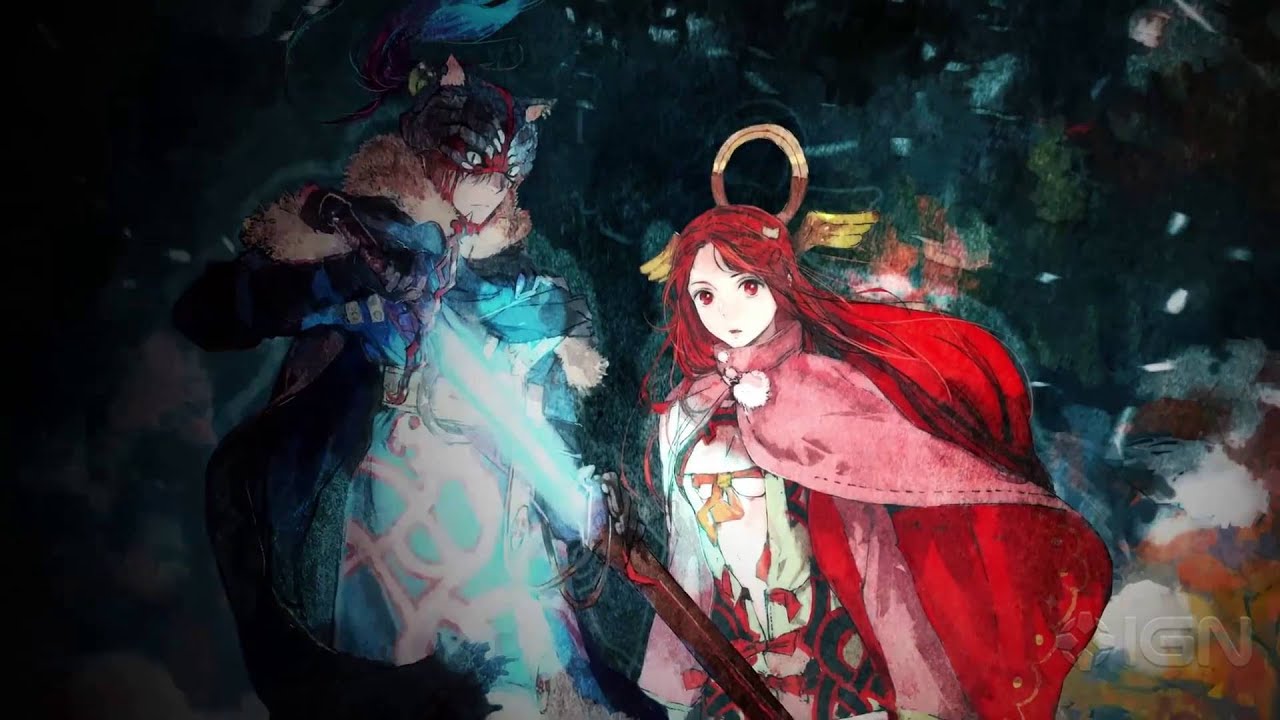
That's not to say that I am Setsuna is a bad looking game. The art is pretty and reminiscent of classic jrpgs, but looks really colorful in high definition. About 90% of the game takes place in snow, which may sound a bit drab, but it fits the story well. The world map does it's job, but doesn't really offer anything worth looking at.
The characters in this game are far more interesting than the story they are put in. The overall idea here is that you are leading a girl to a place where she will sacrifice herself to save the world from monsters. That might seem pretty interesting to someone that hasn't played Final Fantasy X, but that doesn't describe me and I found the story to be a bit too familiar. Fortunately, the character dialog is far better. While the game may have a gloomy feel to it, the characters were lighthearted enough to make sure I was still having fun while meandering through snowy wastelands and forgotten ruins.
The creators took a pretty unique approach to the music in I am Setsuna. With the exception of the battle song and maybe one other, the entire soundtrack is made up of piano music. Most of it is quite good, too. The minimalist approach worked really well to enhance the gloomy atmosphere the game seems to be going for. The biggest surprise was how uplifting the soundtrack could sound at times with just one person playing a piano.
The biggest mixed bag in I am Setsuna is it's combat system. The basics are nearly identical to Chrono Trigger, which is a very good thing. However, the more in depth systems in regards to learning skills and powering them up are unnecessarily complicated. The biggest drawback is that the game doesn't do much in the way of a tutorial to help you understand the flux and momentum systems. The basics behind momentum were pretty simple, as you just press a button when your character attacks and you get some sort of bonus attack or spell connected to it. It's necessary to use to make any progress, but it's pretty simple at first. Where it gets complicated is that momentum attacks are tied into additional powers for you skills and spells called flux. These seem to also be tied into what accessory you have equipped and what flux that accessory has attached to it. Powering up these skills with flux seemed almost entirely random for me, and even after finishing the game, I'm not entirely sure if they are random or if I was doing something wrong. In addition to that, your skills and spells are equippable items called spritinite, which is very similar to Final Fantasy VII's materia. In order to get more spritinite, you need to kill enemies and sell what they drop to the vendor that sells spritinite. Using momentum in battle causes enemies to drop more things, and using different types of spritinite causes enemies to drop different things. To make things even more annoying, the enemies don't drop money, so the only way to get it is to sell monster drops. Factor in to that that there are no inns so you have to heal with tents or cabins, you only have two equippable items (weapon and accessory) and the only thing that goes up when you level is your hit points and sp, you may find that you're trying to figure out what gameplay mechanics you can ignore to get by. Personally, I spent little time with the flux system and chose to level my weapons as high as possible, and ended up having a pretty easy time with the game. Thanks to leveling only increasing hp and sp, I didn't feel much need to grind for levels, and instead spent time grinding for money and monster items so I could get more spritinite.
I would definitely recommend I am Setsuna to fans of classic jrpgs, just with the caveat that you may have to deal with some unnecessary and somewhat useless leveling systems. The story didn't hit me emotionally like I thought it would, but it's still a nice looking game with fun characters.
Rating: 74/100
Thursday, January 14, 2016
PS2 RPG Project: Game 4- Dark Cloud
System I played it on: Playstation 4
How far did you get: One completion, attempted post game dungeon
How many hours did you put into it: 65

One of the Playstation 2's earliest titles, it was often referred to as Sony's response to Zelda. To anyone who played Dark Cloud, this comparison probably seemed rater unusual. Zelda games are action adventure titles with smooth controls. Dark Cloud plays more like an action RPG with rouge-like elements and less smooth controls, designed for more tactical gameplay. The comparison came off as unfair, as the Zelda games are certainly better than Dark Cloud, but Dark Cloud was not trying to do what Zelda was trying to do, and Dark Cloud does do what it does quite well.
Dark Cloud has a very basic story, where the Dark Genie is resurrected and attempts to destroy the world, one village at a time. An old man called the Fairly King traps all the buildings, infrastructure and people into little balls and spreads them out through a dungeon, in order to keep them all from perishing. The Fairy King saves you, and entrusts to you an armband that can open these balls so you can bring each village back to it's former glory. It's a simple and kind of silly story, but it sets things up fairly well. The stories in each village are far more interesting than the overall story.
The battle system, which takes place in the dungeons located in each village, is actually the worst part of Dark Cloud. The game has pretty abysmal controls. On several occasions I found myself dead because my character did not react when I pressed a button. Due to the game having very tight controls, everything is based on timing. You have to be aware of just how long it's going to take to swing your sword if you want to dodge the enemies next attack. If you button mash, your character with attack with most of the buttons presses you made, meaning you may find yourself attacking a few more times than you wanted, causing your death.
Fortunately, as you play through the game and reach new villages, you get new playable characters. The characters that attack with ranged attacks tend to be much easier to play, as mistakes are easier to correct when you're not on top of an enemy. Half of the playable characters are ranged, so this gives you some variety, too.
The dungeons also have a few things you have to keep up with in order to stay alive. You have HP, like you do in most games, however you also have weapon HP and a thirst level. If your weapon HP goes to 0, your weapon breaks and it is gone forever. This can be especially frustrating if you've spent a lot of time leveling one. On a couple occasions, I restarted the game when my weapon broke so I didn't have to level another one. When your thirst meter runs out, you gradually lose HP, so you have to keep water on you at all times to make sure this doesn't happen.
The dungeon layouts are randomized every time you enter them, much like you would see in a rouge-like. This can make the game feel quite gindy, though. If you're looking for a particular item, you can't just go to a particular and expect to always get it. While enemies tend to stay the same on each floor, they have pretty horrible drop rates. Treasure chests are completely randomized. Fortunately, your weapon levels as you use it, so grinding for items isn't a complete waste of time.
The most fun part of Dark Cloud is when you're not in battle. Once you collect enough balls in the dungeon, you can return to the village and begin rebuilding it. It gives you a grid of the village, and you put buildings and infrastructure down anywhere you like. Then you can put add ons to the buildings, such as stairways and the people that actually live in them. As you put down buildings, items will appear near them, which can raise your defense, health, or ability to not get thirsty as quickly. These are absolutely necessary, as your characters do not level up themselves, and this is the only way to raise your non-weapon stats.
As you begin building your villages and talk to the townsfolk, you'll notice they will ask for their buildings to be placed in certain places. Sometimes there is someone in the village they don't like and want to be away from them, or maybe they want to be woke up by the morning sun, so they need their house turned in a direction so the morning sun shines in their window. If you manage to make everyone in the village happy, you'll get some nice bonuses, usually including a new move for one of your characters. It also encourages interacting with the villagers, which I enjoyed doing.
While I certainly wouldn't consider Dark Cloud to be a top tier PS2 RPG, it is fairly fun to play. The most important thing Dark Cloud did was set the groundwork for it's far superior sequel, Dark Cloud 2, which I will get around to reviewing at a later date. It is a long game, so you will definitely get your money's worth, just don't expect a smooth ride.
Rating: 79/100
How far did you get: One completion, attempted post game dungeon
How many hours did you put into it: 65

One of the Playstation 2's earliest titles, it was often referred to as Sony's response to Zelda. To anyone who played Dark Cloud, this comparison probably seemed rater unusual. Zelda games are action adventure titles with smooth controls. Dark Cloud plays more like an action RPG with rouge-like elements and less smooth controls, designed for more tactical gameplay. The comparison came off as unfair, as the Zelda games are certainly better than Dark Cloud, but Dark Cloud was not trying to do what Zelda was trying to do, and Dark Cloud does do what it does quite well.
Dark Cloud has a very basic story, where the Dark Genie is resurrected and attempts to destroy the world, one village at a time. An old man called the Fairly King traps all the buildings, infrastructure and people into little balls and spreads them out through a dungeon, in order to keep them all from perishing. The Fairy King saves you, and entrusts to you an armband that can open these balls so you can bring each village back to it's former glory. It's a simple and kind of silly story, but it sets things up fairly well. The stories in each village are far more interesting than the overall story.
The battle system, which takes place in the dungeons located in each village, is actually the worst part of Dark Cloud. The game has pretty abysmal controls. On several occasions I found myself dead because my character did not react when I pressed a button. Due to the game having very tight controls, everything is based on timing. You have to be aware of just how long it's going to take to swing your sword if you want to dodge the enemies next attack. If you button mash, your character with attack with most of the buttons presses you made, meaning you may find yourself attacking a few more times than you wanted, causing your death.
Fortunately, as you play through the game and reach new villages, you get new playable characters. The characters that attack with ranged attacks tend to be much easier to play, as mistakes are easier to correct when you're not on top of an enemy. Half of the playable characters are ranged, so this gives you some variety, too.
The dungeons also have a few things you have to keep up with in order to stay alive. You have HP, like you do in most games, however you also have weapon HP and a thirst level. If your weapon HP goes to 0, your weapon breaks and it is gone forever. This can be especially frustrating if you've spent a lot of time leveling one. On a couple occasions, I restarted the game when my weapon broke so I didn't have to level another one. When your thirst meter runs out, you gradually lose HP, so you have to keep water on you at all times to make sure this doesn't happen.
The dungeon layouts are randomized every time you enter them, much like you would see in a rouge-like. This can make the game feel quite gindy, though. If you're looking for a particular item, you can't just go to a particular and expect to always get it. While enemies tend to stay the same on each floor, they have pretty horrible drop rates. Treasure chests are completely randomized. Fortunately, your weapon levels as you use it, so grinding for items isn't a complete waste of time.
The most fun part of Dark Cloud is when you're not in battle. Once you collect enough balls in the dungeon, you can return to the village and begin rebuilding it. It gives you a grid of the village, and you put buildings and infrastructure down anywhere you like. Then you can put add ons to the buildings, such as stairways and the people that actually live in them. As you put down buildings, items will appear near them, which can raise your defense, health, or ability to not get thirsty as quickly. These are absolutely necessary, as your characters do not level up themselves, and this is the only way to raise your non-weapon stats.
As you begin building your villages and talk to the townsfolk, you'll notice they will ask for their buildings to be placed in certain places. Sometimes there is someone in the village they don't like and want to be away from them, or maybe they want to be woke up by the morning sun, so they need their house turned in a direction so the morning sun shines in their window. If you manage to make everyone in the village happy, you'll get some nice bonuses, usually including a new move for one of your characters. It also encourages interacting with the villagers, which I enjoyed doing.
While I certainly wouldn't consider Dark Cloud to be a top tier PS2 RPG, it is fairly fun to play. The most important thing Dark Cloud did was set the groundwork for it's far superior sequel, Dark Cloud 2, which I will get around to reviewing at a later date. It is a long game, so you will definitely get your money's worth, just don't expect a smooth ride.
Rating: 79/100
PS2 RPG Project: Game 3- Rogue Galaxy
System I played it on: Playstation 4
How far did you get?: One completion, did not play the ghost ship
How many hours did you put into it?: About 60
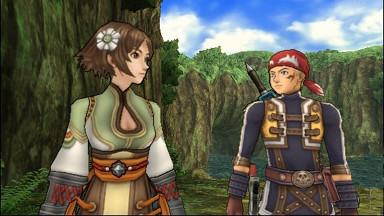
With the recent release of PS2 classics on PS4 with updated resolution and trophies, I thought now would be a good time to start my PS2 RPG project back up. Lucky for us, one of the first games released was Rogue Galaxy, one of the PS2s best RPGs.
You start Rogue Galaxy as a young male character named Jaster Rogue. Not long into the intro, you defeat a rather large monster using a sword given to you by a mysterious man. A couple of robots mistake you for being the infamous hunter Desert Wind, and invite you to join them on their pirate spaceship to plunder the galaxy for lost and hidden treasures.
As you play the game, you unlock a pretty hefty cast of playable characters, each with their own deep stories. As you get each character, you spend some time learning about them, and later in the game you even get conclusions to each of them. Though some characters are more interesting than others, I found the cast to be colorful and memorable.
The game plays in a 3D action RPG style, similar to one of the 3D Tales games, random encounters and all. The battle system seems to work best in the beginning of the game, when you are limited in abilities. As you learn to use your abilities, you start to find that a battle system that initially seemed very challenging is actually a little easy. Once Jaster learned Desert Wind Lv 2, which happened for me pretty early in the game, I was able to one shot most of the enemies until almost halfway through the game. It requires stamina to use them, but money is fairly plentiful so I had no issues affording stamina potions to keep enough of it to breeze through the enemies. This gets more complicated to do as you go through the game, though. Some enemies require you to jump to attack them, and your abilities won't work on them. Others have shields you must break first. I appreciated this as it required me to change up my strategy quite a bit.
The game has no healing spells, so items and money are a must. It also has equipment you can buy and find as you go through the game, but your two weapons are the main focus. Clothing is rare and actually changes the appearance of your characters.
The leveling system is one of my favorite parts of the game. You level as you would in most rpgs, gaining experience points and going up in level, but gaining abilities is a completely different ball game. You have to use items you find in treasure chests, enemy drops, and in stores and put them on a grid system to unlock them. Each character has this, so at times you may find yourself trying to decide which ability on which character is most important, because you may not see that rare item you just received again for a while.
There are a few mini quests to take on as you play the game, too. You can use bug catchers to catch bugs and use them in a fighting arena. There's a factory where you can build machines to make you items and weapons. There is also a hunting system where you buy bills to go after really tough enemies to get points in the galaxy hunter rankings, as well as some unique rewards.
It's not a bad looking game for it's time, either. It uses a cell shaded look, popular from games like Dark Cloud 2 and Dragon Quest 8, and I feel it suits it's purpose well. The resolution upgrade on the PS4 version isn't that noticeable, though. It's not a full remake like the Final Fantasy X version was, so it doesn't look that good, but it's still a colorful game full of lovely things to look at.
At only 15 dollars on the PSN store, Rogue Galaxy is a no brainer in my opinion. You'll get 60 hours or more out it, depending on how far you want to go post game, and with a huge world, great story, and fun battle system, you could do worse than Rogue Galaxy to scratch your RPG itch.
Score: 91/100
How far did you get?: One completion, did not play the ghost ship
How many hours did you put into it?: About 60
With the recent release of PS2 classics on PS4 with updated resolution and trophies, I thought now would be a good time to start my PS2 RPG project back up. Lucky for us, one of the first games released was Rogue Galaxy, one of the PS2s best RPGs.
You start Rogue Galaxy as a young male character named Jaster Rogue. Not long into the intro, you defeat a rather large monster using a sword given to you by a mysterious man. A couple of robots mistake you for being the infamous hunter Desert Wind, and invite you to join them on their pirate spaceship to plunder the galaxy for lost and hidden treasures.
As you play the game, you unlock a pretty hefty cast of playable characters, each with their own deep stories. As you get each character, you spend some time learning about them, and later in the game you even get conclusions to each of them. Though some characters are more interesting than others, I found the cast to be colorful and memorable.
The game plays in a 3D action RPG style, similar to one of the 3D Tales games, random encounters and all. The battle system seems to work best in the beginning of the game, when you are limited in abilities. As you learn to use your abilities, you start to find that a battle system that initially seemed very challenging is actually a little easy. Once Jaster learned Desert Wind Lv 2, which happened for me pretty early in the game, I was able to one shot most of the enemies until almost halfway through the game. It requires stamina to use them, but money is fairly plentiful so I had no issues affording stamina potions to keep enough of it to breeze through the enemies. This gets more complicated to do as you go through the game, though. Some enemies require you to jump to attack them, and your abilities won't work on them. Others have shields you must break first. I appreciated this as it required me to change up my strategy quite a bit.
The game has no healing spells, so items and money are a must. It also has equipment you can buy and find as you go through the game, but your two weapons are the main focus. Clothing is rare and actually changes the appearance of your characters.
The leveling system is one of my favorite parts of the game. You level as you would in most rpgs, gaining experience points and going up in level, but gaining abilities is a completely different ball game. You have to use items you find in treasure chests, enemy drops, and in stores and put them on a grid system to unlock them. Each character has this, so at times you may find yourself trying to decide which ability on which character is most important, because you may not see that rare item you just received again for a while.
There are a few mini quests to take on as you play the game, too. You can use bug catchers to catch bugs and use them in a fighting arena. There's a factory where you can build machines to make you items and weapons. There is also a hunting system where you buy bills to go after really tough enemies to get points in the galaxy hunter rankings, as well as some unique rewards.
It's not a bad looking game for it's time, either. It uses a cell shaded look, popular from games like Dark Cloud 2 and Dragon Quest 8, and I feel it suits it's purpose well. The resolution upgrade on the PS4 version isn't that noticeable, though. It's not a full remake like the Final Fantasy X version was, so it doesn't look that good, but it's still a colorful game full of lovely things to look at.
At only 15 dollars on the PSN store, Rogue Galaxy is a no brainer in my opinion. You'll get 60 hours or more out it, depending on how far you want to go post game, and with a huge world, great story, and fun battle system, you could do worse than Rogue Galaxy to scratch your RPG itch.
Score: 91/100
Subscribe to:
Posts (Atom)
