System: Playstation 3
How far did you get: One completion
NOTE: This review is for the campaign only. I wanted to try out the multiplayer, but I received the game through GameFly and it requires an online pass to play online.
When any series decides to go back and make a prequel, it's usually a sign that you ought to be concerned. Very rarely have I ever played a prequel that was on par with the mainline games. I've rarely seen a good prequel in films, for that matter. While God of War: Ascension does feel a bit stunted, I'm not sure it's fair to categorize in this way. It's still a good game in it's own right.
The game takes place before the first God of War, following a blinded Kratos on his search for the truth. It's a really basic story and really doesn't add anything to the lore. The "amnesiac hero tries to find himself" story trope has been done to death, and isn't done differently here. The cast of enemies aren't particularly interesting, either. I don't remember any of their names, and the large monsters they summoned were cool to see, but forgettable.
Combat and visuals is where this game shines. It's slightly disappointing that you spend most of the game attacking with magic enhanced versions of the same weapon, but you do pick up other weapons that can be used temporarily that are pretty useful. Once you level up your magic abilities, you can do some pretty devastating attacks that not only do a lot of damage, but look pretty amazing too. It doesn't really play any differently than the other God of War games, but that's not really bad a thing. The series is known for having very fluid and fun combat, and this game upholds that.
God of War: Ascension is stunning to look at. It doesn't amaze quite the way God of War 3 did, but this can be attributed to having played God of War 3 already. This game looks a lot like God of War 3, and that's a compliment. The kills are gory as ever, and I actually like some of them in this game better than I do in God of War 3. Split heads, guts pouring out of cut open enemies, and mangled body parts make for a disgusting and fun time.
The puzzles in this game were actually really well done. Throughout the game, you receive items that can be used to help you figure out these puzzles, and some of them were quite clever. An amulet you receive can make the backdrops heal or decay, and another item will allow you to create a clone man to hold some things in place. I got frustrated a few times, but that's a sign of a good puzzle.
Though God of War: Ascension could have used some better writing, it's still an epic looking and fun God or War game. If you're into the series, there's no reason you should pass it up, but if you're new to it than I'd recommend starting with the the God of War collection or God or War 3, as they are slightly better than this game.
Rating: 75/100.
Friday, November 1, 2013
Friday, October 25, 2013
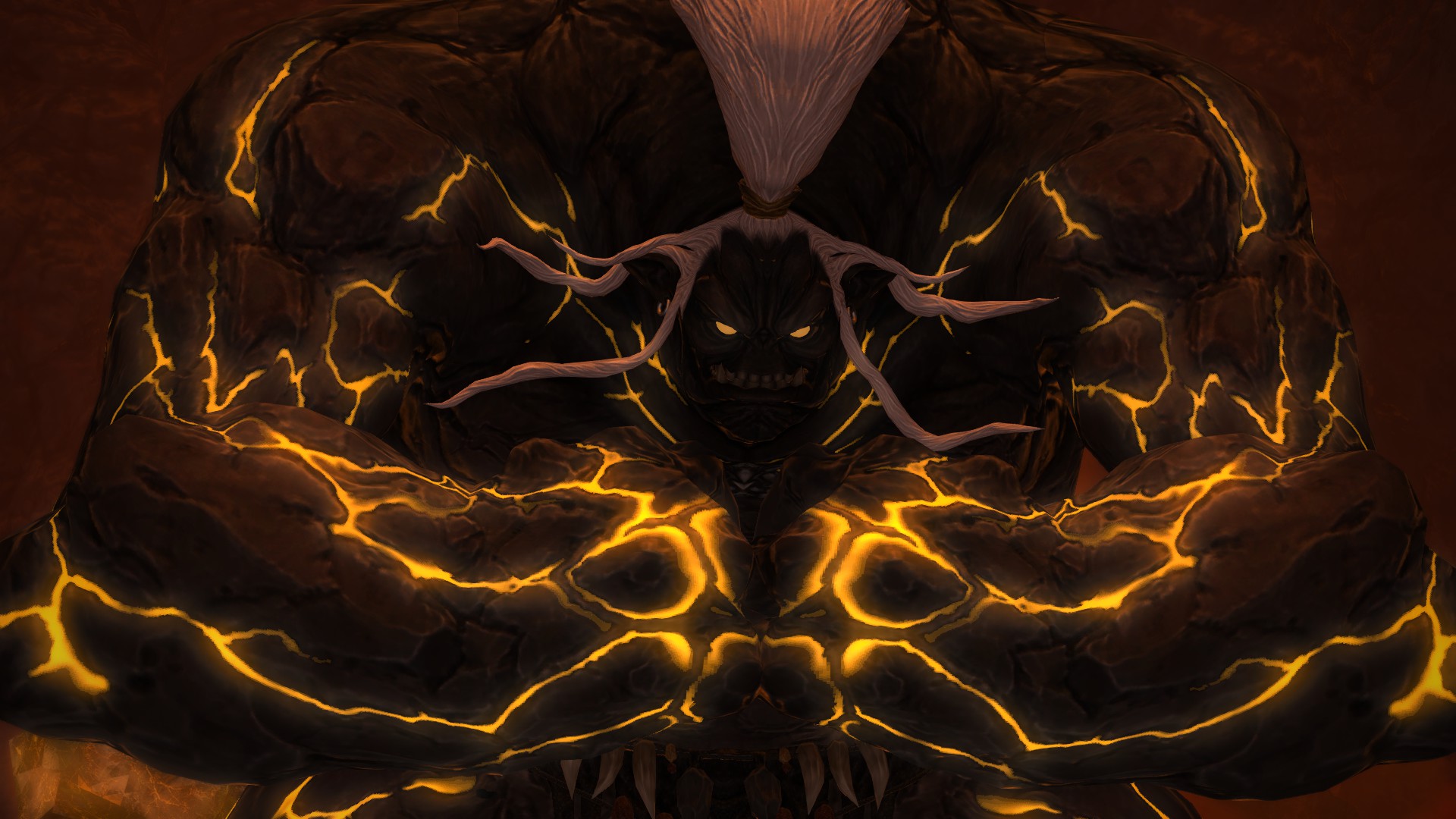
How to Beat Titan Hard Mode in Final Fantasy XIV: A Realm Reborn
1. Before you do anything, head over to youtube and watch a video on this fight. Watch it several times, until you are familiar with his rotation. If you have to, watch it a few times, queue for it in the duty finder and try it yourself, then watch the videos again so you are more familiar with what is going on. If you know what he's about to do, it's much easier to dodge it.
2. Dodge. Every class needs to know this. If you are a tank, it's still imperative that you dodge landslide. After Titan's first Geocrush, the sides of the arena are knocked off, and you can be knocked off. Everyone else must dodge everything except tumult, and the only reason you don't dodge that is because you can't. Landslide is very easy to dodge, but weight of the land can be tricky. This is why it is helpful to know the rotation beforehand. If you know weight of the land is coming, make sure you're not standing too near other people, and go ahead and get a head start running. You'll get out every time, I guarantee it.
3. Make sure you are zoomed all the way out. This is necessary to know the order the bombs are placed, and it helps you notice when someone else is captured by a granite gaol. You should probably be playing this way anyway, but the game doesn't set you up this way, so I feel like I should mention it.
4. Speaking of granite gaols, make sure you destroy them quickly, with the exception of one. During the heart phase, do not destroy the second one. You will not have time. After the heart is dead, then you can destroy the second gaol. The first gaol in the heart phase is especially important to destroy as soon as possible.
5. If you are damage dealer, you must live until after the heart phase. The heart phase is a dps race, so you need to be there for that. Don't expect a raise, as they are very difficult to pull off in this fight. They can happen, and you might get lucky, but don't count on it. Oh, and if you get knocked off, you can't be raised. It's preferable for you to live until the end, but if you die during the final phase, it's still possible to finish Titan.
6. If you are a healer, you must live until the end of the fight. If either healer dies, it's a wipe. You'll have to constantly be healing everyone thanks to tumults, and during the last phase Titan will start using mountain buster, which will do a very large amount of damage on the tank.
7. If you are a caster (healer or black mage) and you find yourself standing in something, stop casting and move. I'm going to reiterate a particular part of this: STOP CASTING and move. This is important for healers as they must live to the end. It's important for black mages because they not only need to make it to the heart phase, but they also have less hp than any class in the game and not getting hit by anything is going to be a necessity. I would know, I play a black mage.
So watch the vids, memorize the rotation, and take my advice. I need more people who know how to win this fight, because I'm getting really frustrated losing over and over again, knowing it was because someone can't move out of attacks or simply don't know what to do. The fact that the hardest part of this fight is finding a group of people that can actually do it is really, really obnoxious.
One more bit of advice. Be geared for this. Have all of your darklight gear, and try to at least have a primal weapon or a crafted ilvl 70 weapon with materia on it.
Thanks for reading, and good luck finding a decent group for this fight!
Edit: I have defeated Titan! My tips still stand :)
Friday, October 11, 2013
Review! Final Fantasy XIV: A Realm Reborn
System: PC (also available on PS3 and soon to be PS4)
How far did you get: Main story completed, Level 50 Black Mage, Level 15 Archer, Level 47 Botanist, Level 46 Goldsmith
Final Fantasy XIV version 1.0 was released back in 2010 to almost universal disgust. Personally, I spent about a month trying to figure it out, but getting nowhere. Quest lines were difficult to find and follow, crafting was confusing, and the combat was incredibly bland. The disappointment was heard by Square Enix, and they chose to shut the game down in December of 2012, with the promise that the game would be back, new and improved.
I wasn't going to play Final Fantasy XIV: A Realm Reborn (FF:ARR from here on). I didn't think the framework was good enough for them to be able to salvage this game. After reading that beta testers were enjoying it, and remembering how much I love Final Fantasy, I decided to give it a shot. Am I ever glad I did.
Square Enix didn't just build on the framework. They completely turned FFXIV upside down. The graphics aren't even the same. They decided to use a more animated look, and the game is better off for it. The battle system is flashy and fun. Crafting makes sense now. The quests are now laid out in a way that makes sense. Everything that made FFXIV version 1.0 terrible is now fixed. Even after playing the game since early access, I still can't believe how good this game is.
On paper, it isn't that much different from any other MMORPG you may have played. It borrows nearly every concept from other games. However, it's refined all of them into near perfection and leaves out all the bad stuff. Did you like the world events in Rift and Guild Wars 2, but didn't much care for the weapon switching and obnoxious combat? Check out FFXIV: ARR's FATEs. Very rarely are they in the way of other things you may be doing, and they are a lot of fun. In fact, I'd say about half the community spends most of their time creating FATE parties and just running around looking for new FATEs to do, and there are a lot of them to do. Some FATE's even offer unique rewards, like minions and gear.
The combat is similar to what you may be used to in games like World of Warcraft. You map your skills to your number keys and let the attacks fly. It seems fairly well balanced, though there is no way to know for sure currently, as there is no DPS counter. Difficulty for world leveling is done fairly well. Tanks don't die because they have a lot of HP and high defense, healers can heal themselves, ranged damage dealers kill things before they get hit and melee damage dealers do a lot of damage and can take a few hits, too. These are things you've seen before, but it's still fun.
Classes are done slightly different in FFXIV: ARR than most MMORPGs. You don't really need more than one character, because your character can learn to do everything. This includes all combat classes, gathering classes, and crafting classes. All you have to is switch your weapon. Gathering and crafting classes are actually classes all on their own, and are leveled just like combat classes, including their very own gear sets. It's refreshing to play an MMORPG that will allow you to take control of everything yourself, if you're willing to put an extreme amount of time into it.
The game doesn't have PvP yet, but it seems to be in the works. The Duty Finder has a PvP option listed, and my Black Mage has spells that seem pretty useless in PvE, but would be very useful in PvP.
Story quests follow a path the helps you see most of the areas in the game. They take you to different areas in the world, and offer you a few side quests in each quest hub. Each quest hub also has a Levemete, which is a place you can do levequests. Levequests are short extra quests you can take to grab some extra XP when you find yourself a bit too low of a level to handle story quests. You get a certain amount of allowances on these quests, though you probably won't blow through them until you start crafting. Yes, you get levequests for crafting and gathering too.
The Duty Finder is a tool that works similarly to World of Warcraft's Dungeon Finder. You can use to queue for dungeons, primal battles, and guildheists. Dungeons are exactly the same thing you've played in any other MMORPG. Primal battles are fought against a single large enemy, and are unlocked through the main quest. Guildheists are mini-dungeons, where you have one objective that you must complete with a group, and they are based on your level.
That seems like a lot of ways to get XP, doesn't it? Well, there's more! You can also use your hunting log to kill certain enemies and gain extra XP. About halfway through leveling, you'll gain access to one of the main companies, which has it's own hunting log to do, as well. If that's not enough for you, you also get a sizable amount of XP just by exploring all of the areas of the game. It has an achievement system, too.
FFXIV: ARR is visually stunning. While it's probably not on par with Guild Wars 2 or Rift on a technical level, I found it to be much more visually appealing. It's an incredibly colorful game with a wide variety of things to look at. Every race is very distinct, all of the armor properly reflects the class wearing it, and the enemy designs look great.
The music and sound are great, too. Check out a couple of tracks I personally enjoy. The first is the theme for the main city Limsa Lominsa, and the second is Cortheus, a snowy tundra found in the 35-40 level range.
http://www.youtube.com/watch?v=qQHAUw3wb9U
http://www.youtube.com/watch?v=vbtWmze50ag
Crafting and gathering are a bit of a pain right now, but that has a lot to do with an undeveloped game economy. Unless you have leveled all the gathering classes to level 50, crafting is going to be pretty annoying, and gathering takes a very long time to level. I will admit that even though gathering is a long process, it's still not quite as bad as in some other major MMOs. Crafting is fairly fun to actually do, as you have to try to even out quality and actual progress when making something. Gathering, on the other hand, is busy work and nothing else. Gathering is probably the only thing I've done in the game that I didn't particularly care for, as it's not only a boring time sink, but the rewards are pretty low as well.
In it's current build, FFXIV: ARR is the best apology I've ever gotten from a gaming company. They turned something that was complete garbage into the best MMORPG on the market, and that not only takes time and dedication, it also takes respect for it's fans. For the first time since FFX, I feel like Square Enix heard our cries and honestly wanted to make a game we would spend hours in. I have, and will continue to do so.
Rating: 96/100
How far did you get: Main story completed, Level 50 Black Mage, Level 15 Archer, Level 47 Botanist, Level 46 Goldsmith
Final Fantasy XIV version 1.0 was released back in 2010 to almost universal disgust. Personally, I spent about a month trying to figure it out, but getting nowhere. Quest lines were difficult to find and follow, crafting was confusing, and the combat was incredibly bland. The disappointment was heard by Square Enix, and they chose to shut the game down in December of 2012, with the promise that the game would be back, new and improved.
I wasn't going to play Final Fantasy XIV: A Realm Reborn (FF:ARR from here on). I didn't think the framework was good enough for them to be able to salvage this game. After reading that beta testers were enjoying it, and remembering how much I love Final Fantasy, I decided to give it a shot. Am I ever glad I did.
Square Enix didn't just build on the framework. They completely turned FFXIV upside down. The graphics aren't even the same. They decided to use a more animated look, and the game is better off for it. The battle system is flashy and fun. Crafting makes sense now. The quests are now laid out in a way that makes sense. Everything that made FFXIV version 1.0 terrible is now fixed. Even after playing the game since early access, I still can't believe how good this game is.
On paper, it isn't that much different from any other MMORPG you may have played. It borrows nearly every concept from other games. However, it's refined all of them into near perfection and leaves out all the bad stuff. Did you like the world events in Rift and Guild Wars 2, but didn't much care for the weapon switching and obnoxious combat? Check out FFXIV: ARR's FATEs. Very rarely are they in the way of other things you may be doing, and they are a lot of fun. In fact, I'd say about half the community spends most of their time creating FATE parties and just running around looking for new FATEs to do, and there are a lot of them to do. Some FATE's even offer unique rewards, like minions and gear.
The combat is similar to what you may be used to in games like World of Warcraft. You map your skills to your number keys and let the attacks fly. It seems fairly well balanced, though there is no way to know for sure currently, as there is no DPS counter. Difficulty for world leveling is done fairly well. Tanks don't die because they have a lot of HP and high defense, healers can heal themselves, ranged damage dealers kill things before they get hit and melee damage dealers do a lot of damage and can take a few hits, too. These are things you've seen before, but it's still fun.
Classes are done slightly different in FFXIV: ARR than most MMORPGs. You don't really need more than one character, because your character can learn to do everything. This includes all combat classes, gathering classes, and crafting classes. All you have to is switch your weapon. Gathering and crafting classes are actually classes all on their own, and are leveled just like combat classes, including their very own gear sets. It's refreshing to play an MMORPG that will allow you to take control of everything yourself, if you're willing to put an extreme amount of time into it.
The game doesn't have PvP yet, but it seems to be in the works. The Duty Finder has a PvP option listed, and my Black Mage has spells that seem pretty useless in PvE, but would be very useful in PvP.
Story quests follow a path the helps you see most of the areas in the game. They take you to different areas in the world, and offer you a few side quests in each quest hub. Each quest hub also has a Levemete, which is a place you can do levequests. Levequests are short extra quests you can take to grab some extra XP when you find yourself a bit too low of a level to handle story quests. You get a certain amount of allowances on these quests, though you probably won't blow through them until you start crafting. Yes, you get levequests for crafting and gathering too.
The Duty Finder is a tool that works similarly to World of Warcraft's Dungeon Finder. You can use to queue for dungeons, primal battles, and guildheists. Dungeons are exactly the same thing you've played in any other MMORPG. Primal battles are fought against a single large enemy, and are unlocked through the main quest. Guildheists are mini-dungeons, where you have one objective that you must complete with a group, and they are based on your level.
That seems like a lot of ways to get XP, doesn't it? Well, there's more! You can also use your hunting log to kill certain enemies and gain extra XP. About halfway through leveling, you'll gain access to one of the main companies, which has it's own hunting log to do, as well. If that's not enough for you, you also get a sizable amount of XP just by exploring all of the areas of the game. It has an achievement system, too.
FFXIV: ARR is visually stunning. While it's probably not on par with Guild Wars 2 or Rift on a technical level, I found it to be much more visually appealing. It's an incredibly colorful game with a wide variety of things to look at. Every race is very distinct, all of the armor properly reflects the class wearing it, and the enemy designs look great.
The music and sound are great, too. Check out a couple of tracks I personally enjoy. The first is the theme for the main city Limsa Lominsa, and the second is Cortheus, a snowy tundra found in the 35-40 level range.
http://www.youtube.com/watch?v=qQHAUw3wb9U
http://www.youtube.com/watch?v=vbtWmze50ag
Crafting and gathering are a bit of a pain right now, but that has a lot to do with an undeveloped game economy. Unless you have leveled all the gathering classes to level 50, crafting is going to be pretty annoying, and gathering takes a very long time to level. I will admit that even though gathering is a long process, it's still not quite as bad as in some other major MMOs. Crafting is fairly fun to actually do, as you have to try to even out quality and actual progress when making something. Gathering, on the other hand, is busy work and nothing else. Gathering is probably the only thing I've done in the game that I didn't particularly care for, as it's not only a boring time sink, but the rewards are pretty low as well.
In it's current build, FFXIV: ARR is the best apology I've ever gotten from a gaming company. They turned something that was complete garbage into the best MMORPG on the market, and that not only takes time and dedication, it also takes respect for it's fans. For the first time since FFX, I feel like Square Enix heard our cries and honestly wanted to make a game we would spend hours in. I have, and will continue to do so.
Rating: 96/100
Wednesday, August 7, 2013
Review! Shin Megami Tensei IV
System: Nintendo 3DS (exclusively)
How far did you get: One completion, Chaos ending, 56 hours
Shin Megami Tensei IV (SMT IV from here on) was easily my most anticipated game of 2013, which may make it seem like I'm biased. However, this also means I'm really disappointed when the game doesn't deliver, and on occasion, SMT IV does not. Most of the time, it does.
The Shin Megami Tensei series is known for a lot of things, and SMT IV upholds nearly all of them. It's apocalyptic, dark, mature, and painfully hard. If your only experience with the series is the spin off Persona games or Devil Survivor games, you're going to get a slightly different experience here. SMT IV isn't really about it's individual characters so much as it is about the big picture. What you're doing to the world around you is much more important than what you're doing to your friends.
The game starts off a bit slow and very unlike a Shin Megami Tensei game. The very first thing that happens in the game will actually be very familiar to anyone that has played the first SMT title, but after that quick intro, you'll be spending most of your time in the Eastern Kingdom of Mikado, a 1400s Japanese land filled with castles and Samurai. Fortunately, you find out that a Samurai's duty has more to do with killing demons with a futuristic armband and summoning your own demons than it does with swords and ancient Japan. You become one of these Samurai, and head to a cave full of demons with your fellow Samurai. The other Samurai, while not particularly interesting people, are key to the game in that agreeing with certain friends on certain issues determines your alignment, and ultimately, the ending you'll get when you finish the game.
Everything really opens up when you reach Tokyo. I don't want to spoil any more of the game, so we'll leave it at that, but I'll say that Tokyo is absolutely nothing like the Eastern Kingdom of Mikado, and you'll be glad for it.
While the story is interesting, the game really shines in it's combat. It uses the press turn system, so if you've played Shin Megami Tensei: Nocturne or the newer Persona games, you should be fairly accustomed to the battle system. It's really simple on paper: exploit weakness, and get more turns. It gets more complicated when you have attacks that hit all of the enemies, and you fight new enemies that have weaknesses you don't know about yet. The battles as fast as you want them to be, but animations are smooth and quick so they can be quite fast if you already know what you're doing. Different attacks result in different death animations, some of which are pretty cool looking.
The game has it's ups and downs when it comes to how it looks. Outside of battle, you run around in a 3rd person perspective though some pretty elaborate dungeons. It also has this pretty cool system where you can jump up or down into certain areas, which is new to this series. The bad part is how simplistic the battles look. The art design on the demons is actually really good (most of the time), but you'll still never forget that you're playing a 3DS and looking at 2d sprites. When you talk to the demons, you'll see hand drawn versions of them, which usually look pretty amazing and a lot better than the on screen sprites.
Speaking of talking to demons, that's another really awesome aspect to battle. It's a really deep system with a lot of choices. The most important aspect of talking to demons is recruiting. It's basically like Pokemon, but a lot more fun. Instead of just throwing a ball at your enemy to make them your friend, you have to convince them through conversation that it would be worth it to them. Considering you're trying to convince demons to join you, you'll definitely have some pretty wacky conversations. The different demon races all have different attitudes, so while buttering up one demon might work, it might piss off another demon. In addition to scouting and recruiting, you can also ask them for money and items, as well as trying to convince them to stand down and let you go. These can be useful when you're not sure if you can beat a demon, or a fight is going badly.
Oh, and fights will go badly. SMT IV is not only hard, it's at it's hardest right at the beginning of the game. You don't have any demons right off the bat, and you'll need to fill your roster as soon as possible. The game doesn't make it very clear that it's necessary to do that, though if you're a Shin Megami Tensei veteran, you'll know already. When you die, you're sent to the River Styx, where Charon will resurrect you for a price. After dying twice, you're given the option to lower the difficulty. Most newcomers will do this, and most veterans will refuse. The game also allows you to save anywhere. This is the first Shin Megami Tensei title to allow you to do any of those things, so theoretically it should be one of the easier Shin Megami Tensei titles, though it certainly never felt like it.
It's difficult to get bored with SMT IV. For the first time in the series, you have a quest list. It's split into main quests and challenge quests. Challenge quests are basically side quests, and you'll spend most of the game doing these. If you're not doing quests, you can work on increases your demon compendium, or fusing them for better demons. When not doing that, you can work on leveling your characters and demons, so you can create higher level demons and get more app points. Apps are a new feature to the series as well. By using app points, you upgrade your armband and open all kinds of possibilities, like increasing the amount of demons you can hold, regaining hp and mp as you walk, and increasing your dialog options when talking to demons.
On the more negative side of things, the Tokyo map is a total pain to get around, and it's not particularly nice to look at, either. You eventually get to option of flying around the map, assuming you do the right challenge quest, but it comes really late in the game. For most of the game, you'll be controlling a little peg on a map that does not have clear paths at all.
Even worse is the DLC for this game. New small bits of DLC is released every week for this game, and very little of it has impressed me. I preordered the game at Gamestop, and received an armor set. If you equip the armor set at the beginning of the game, it makes you weak to physical attacks, and you'll never survive. Thanks a lot, Gamestop! In addition, Atlus released 3 booster DLCs where you get pretty much unlimited access to experience points, app points, and macca (money). If you want to completely ruin your SMT IV experience, try these out. They completely ruin the challenge. I did enjoy some of the armor sets, but I do not approve of releasing DLC where you can max level your main character in an hour.
I don't really think SMT IV is the Shin Megami Tensei game I would recommend to a newcomer to the series due to it's extreme difficulty, but it's going to make a lot of veterans really happy. It's not quite as good as Shin Megami Tensei: Nocturne, but the demon collection, dark story and addictive battle system are enough for me to give this game a thumbs up.
Rating: 91/100
How far did you get: One completion, Chaos ending, 56 hours
Shin Megami Tensei IV (SMT IV from here on) was easily my most anticipated game of 2013, which may make it seem like I'm biased. However, this also means I'm really disappointed when the game doesn't deliver, and on occasion, SMT IV does not. Most of the time, it does.
The Shin Megami Tensei series is known for a lot of things, and SMT IV upholds nearly all of them. It's apocalyptic, dark, mature, and painfully hard. If your only experience with the series is the spin off Persona games or Devil Survivor games, you're going to get a slightly different experience here. SMT IV isn't really about it's individual characters so much as it is about the big picture. What you're doing to the world around you is much more important than what you're doing to your friends.
The game starts off a bit slow and very unlike a Shin Megami Tensei game. The very first thing that happens in the game will actually be very familiar to anyone that has played the first SMT title, but after that quick intro, you'll be spending most of your time in the Eastern Kingdom of Mikado, a 1400s Japanese land filled with castles and Samurai. Fortunately, you find out that a Samurai's duty has more to do with killing demons with a futuristic armband and summoning your own demons than it does with swords and ancient Japan. You become one of these Samurai, and head to a cave full of demons with your fellow Samurai. The other Samurai, while not particularly interesting people, are key to the game in that agreeing with certain friends on certain issues determines your alignment, and ultimately, the ending you'll get when you finish the game.
Everything really opens up when you reach Tokyo. I don't want to spoil any more of the game, so we'll leave it at that, but I'll say that Tokyo is absolutely nothing like the Eastern Kingdom of Mikado, and you'll be glad for it.
While the story is interesting, the game really shines in it's combat. It uses the press turn system, so if you've played Shin Megami Tensei: Nocturne or the newer Persona games, you should be fairly accustomed to the battle system. It's really simple on paper: exploit weakness, and get more turns. It gets more complicated when you have attacks that hit all of the enemies, and you fight new enemies that have weaknesses you don't know about yet. The battles as fast as you want them to be, but animations are smooth and quick so they can be quite fast if you already know what you're doing. Different attacks result in different death animations, some of which are pretty cool looking.
The game has it's ups and downs when it comes to how it looks. Outside of battle, you run around in a 3rd person perspective though some pretty elaborate dungeons. It also has this pretty cool system where you can jump up or down into certain areas, which is new to this series. The bad part is how simplistic the battles look. The art design on the demons is actually really good (most of the time), but you'll still never forget that you're playing a 3DS and looking at 2d sprites. When you talk to the demons, you'll see hand drawn versions of them, which usually look pretty amazing and a lot better than the on screen sprites.
Speaking of talking to demons, that's another really awesome aspect to battle. It's a really deep system with a lot of choices. The most important aspect of talking to demons is recruiting. It's basically like Pokemon, but a lot more fun. Instead of just throwing a ball at your enemy to make them your friend, you have to convince them through conversation that it would be worth it to them. Considering you're trying to convince demons to join you, you'll definitely have some pretty wacky conversations. The different demon races all have different attitudes, so while buttering up one demon might work, it might piss off another demon. In addition to scouting and recruiting, you can also ask them for money and items, as well as trying to convince them to stand down and let you go. These can be useful when you're not sure if you can beat a demon, or a fight is going badly.
Oh, and fights will go badly. SMT IV is not only hard, it's at it's hardest right at the beginning of the game. You don't have any demons right off the bat, and you'll need to fill your roster as soon as possible. The game doesn't make it very clear that it's necessary to do that, though if you're a Shin Megami Tensei veteran, you'll know already. When you die, you're sent to the River Styx, where Charon will resurrect you for a price. After dying twice, you're given the option to lower the difficulty. Most newcomers will do this, and most veterans will refuse. The game also allows you to save anywhere. This is the first Shin Megami Tensei title to allow you to do any of those things, so theoretically it should be one of the easier Shin Megami Tensei titles, though it certainly never felt like it.
It's difficult to get bored with SMT IV. For the first time in the series, you have a quest list. It's split into main quests and challenge quests. Challenge quests are basically side quests, and you'll spend most of the game doing these. If you're not doing quests, you can work on increases your demon compendium, or fusing them for better demons. When not doing that, you can work on leveling your characters and demons, so you can create higher level demons and get more app points. Apps are a new feature to the series as well. By using app points, you upgrade your armband and open all kinds of possibilities, like increasing the amount of demons you can hold, regaining hp and mp as you walk, and increasing your dialog options when talking to demons.
On the more negative side of things, the Tokyo map is a total pain to get around, and it's not particularly nice to look at, either. You eventually get to option of flying around the map, assuming you do the right challenge quest, but it comes really late in the game. For most of the game, you'll be controlling a little peg on a map that does not have clear paths at all.
Even worse is the DLC for this game. New small bits of DLC is released every week for this game, and very little of it has impressed me. I preordered the game at Gamestop, and received an armor set. If you equip the armor set at the beginning of the game, it makes you weak to physical attacks, and you'll never survive. Thanks a lot, Gamestop! In addition, Atlus released 3 booster DLCs where you get pretty much unlimited access to experience points, app points, and macca (money). If you want to completely ruin your SMT IV experience, try these out. They completely ruin the challenge. I did enjoy some of the armor sets, but I do not approve of releasing DLC where you can max level your main character in an hour.
I don't really think SMT IV is the Shin Megami Tensei game I would recommend to a newcomer to the series due to it's extreme difficulty, but it's going to make a lot of veterans really happy. It's not quite as good as Shin Megami Tensei: Nocturne, but the demon collection, dark story and addictive battle system are enough for me to give this game a thumbs up.
Rating: 91/100
Monday, July 8, 2013
Review! DMC: Devil May Cry
System: Playstation 3 (also available on Xbox 360 and PC)
How far did you get: One completion
Devil May Cry is a pretty old series at this point, and the more modern entries were a bit stale. In my opinion, very few video games need a reboot, but if any game did it was Devil May Cry. Though many reboots may end up being shadows of their former selves, DMC: Devil May Cry took something that was already pretty good and made it awesome.
DMC decided to take a slightly more lighthearted turn. While the game is still full of dark themes and over the top weirdness, it doesn't take itself too seriously. This can be bad for some games, but when you're working with the material DMC is, taking it seriously would make it seem legitimately silly. Dante, the main playable character in DMC, is a violent, sex obsessed jerk with a touch of amnesia. His brother Virgil is tasked with convincing him that he's half demon and half angel, and demons killed his mother and took his father to Hell. In addition, the demons are currently controlling humankind and Virgil wants to set them free. It's certainly not game of the year material, but it sets the stage perfectly for an over the top action game.
DMC's gameplay is an absolute blast. It's fast and frantic, and very rarely lets up. I'd say it's even faster and more frantic than any of the other games in the series. Fortunately, you can't just button mash you're way though the game. You unlock different weapons with different properties as you play through the game, and certain enemy types can only be damaged by certain weapons. This becomes particularly challenging when fighting large groups of mismatched enemies, forcing you to switch between weapons several times mid fight. The controls are all very responsive and fluid, though it could have benefited from a target button.
In addition to being fun to play, it's fun to look at too. You'll spend most of the game fighting in Limbo, which is basically a regular area with a red foggy tint to it. The world basically explodes around you as you move from place to place, keeping you on your toes. There's one area where you fight inside a television, and the digital effects are really amazing.
If you have any interest in action games, DMC: Devil May Cry is a no brainer. It may not be the most complicated or deep game on the market, but it's fast, crazy and a whole lot of fun.
Rating: 87/100
How far did you get: One completion
Devil May Cry is a pretty old series at this point, and the more modern entries were a bit stale. In my opinion, very few video games need a reboot, but if any game did it was Devil May Cry. Though many reboots may end up being shadows of their former selves, DMC: Devil May Cry took something that was already pretty good and made it awesome.
DMC decided to take a slightly more lighthearted turn. While the game is still full of dark themes and over the top weirdness, it doesn't take itself too seriously. This can be bad for some games, but when you're working with the material DMC is, taking it seriously would make it seem legitimately silly. Dante, the main playable character in DMC, is a violent, sex obsessed jerk with a touch of amnesia. His brother Virgil is tasked with convincing him that he's half demon and half angel, and demons killed his mother and took his father to Hell. In addition, the demons are currently controlling humankind and Virgil wants to set them free. It's certainly not game of the year material, but it sets the stage perfectly for an over the top action game.
DMC's gameplay is an absolute blast. It's fast and frantic, and very rarely lets up. I'd say it's even faster and more frantic than any of the other games in the series. Fortunately, you can't just button mash you're way though the game. You unlock different weapons with different properties as you play through the game, and certain enemy types can only be damaged by certain weapons. This becomes particularly challenging when fighting large groups of mismatched enemies, forcing you to switch between weapons several times mid fight. The controls are all very responsive and fluid, though it could have benefited from a target button.
In addition to being fun to play, it's fun to look at too. You'll spend most of the game fighting in Limbo, which is basically a regular area with a red foggy tint to it. The world basically explodes around you as you move from place to place, keeping you on your toes. There's one area where you fight inside a television, and the digital effects are really amazing.
If you have any interest in action games, DMC: Devil May Cry is a no brainer. It may not be the most complicated or deep game on the market, but it's fast, crazy and a whole lot of fun.
Rating: 87/100
Friday, June 28, 2013
Review! The Witcher 2: Enchanced Edition
System: PC (also available on Xbox 360)
How far did you get: One completion
The Witcher 2, a game originally released for the PC and later ported to the Xbox 360, is the sequel to a game where you play as Geralt of Rivia, a white haired monster slayer who seems to have lost his memory. The Xbox 360 version was released as the Enhanced Edition from the start, and the PC version was updated to the Enhanced Edition for free when this happened.
The most notable addition is that there is a legitimate tutorial. The original game had an opening that sort of acted like a tutorial, but it didn't really tell you how to do anything. To be honest, the new tutorial isn't that helpful either. Rather than tell you what keys to press, it will give you a general idea of what button to press. For instance, instead of "press left click", it would say "press the attack button." At one point I was actually stuck in the tutorial because I didn't know which button threw bombs, and I actually had to exit back to the main menu to access the key configuration.
Once you get through the tutorial, you're in for a really deep, mature story. Every decision you make in this game has consequences, and for everyone that you do something good for, someone else is going to get screwed over. Every time you are in a position to make a decision, there is never a real right answer, and it makes for a really intriguing experience. At the end of chapter one, you are given a choice on whether to side with one of two different factions, and chapter 2 and 3 are vastly different depending on which you choose.
The PC version is stunning to look at. In fact, the only PC games that probably look better than this are the last two Crysis titles. It does require a very powerful PC to run on Ultra, and a pretty good one to run at all. It manages to load big open spaces without a hitch, and look absolutely amazing in the process.
The game is designed in an interesting way, too. It's not quite open world, but it's not quite linear either. It's a bit like Dragon Age, but more open world. It has a prologue, 3 main chapters, and an epilogue. In each, you are exploring entirely different areas, but most of the time you are allowed to explore them at your own pace, and you can do whatever quests you want to do in whatever order you want to do them in. Side quests are entirely optional, but the rewards make them worth it. The side quest stories are also incredibly in depth and no less interesting than the main quests.
The combat is a mixed bag, though. It's different from any western style RPG I've played, but it doesn't always pay off. The controls are not very tight. There's a delay when you click to swing your sword, making the game feel almost like a free to play MMO. Fortunately, it is in depth and challenging enough to keep you feeling engaged. While many games of this sort will have you relying on health potions and healing magic to keep you alive, The Witcher 2 wants you to not need to do something like that in the first place. The idea is to use buff potions on yourself before battles, so you'll survive the fight. If you're getting low on health in a fight, you're just going to have to play better, buy or craft new armor, or use different potions before the fight next time.
The crafting system is a mixed bag, too. The mechanics of it are actually quite good, but you only need it for particular things. If you do all the side quests, you'll almost never need to craft armor or swords, as the side quests give you some really awesome gear. Potions and enhancements are a different story. They aren't exactly lying around to pick up in most cases, so you're either going to need to buy them, or craft them. Considering how plentiful ingredients are, you'd be silly not to just craft them in most cases.
The Witcher 2: Enhanced Edition is truly a must play for fans of the western style RPG genre. Despite a few snags, it's unique, challenging, nice to look at and tells one of the best stories the genre has seen yet.
Rating: 88/100
How far did you get: One completion
The Witcher 2, a game originally released for the PC and later ported to the Xbox 360, is the sequel to a game where you play as Geralt of Rivia, a white haired monster slayer who seems to have lost his memory. The Xbox 360 version was released as the Enhanced Edition from the start, and the PC version was updated to the Enhanced Edition for free when this happened.
The most notable addition is that there is a legitimate tutorial. The original game had an opening that sort of acted like a tutorial, but it didn't really tell you how to do anything. To be honest, the new tutorial isn't that helpful either. Rather than tell you what keys to press, it will give you a general idea of what button to press. For instance, instead of "press left click", it would say "press the attack button." At one point I was actually stuck in the tutorial because I didn't know which button threw bombs, and I actually had to exit back to the main menu to access the key configuration.
Once you get through the tutorial, you're in for a really deep, mature story. Every decision you make in this game has consequences, and for everyone that you do something good for, someone else is going to get screwed over. Every time you are in a position to make a decision, there is never a real right answer, and it makes for a really intriguing experience. At the end of chapter one, you are given a choice on whether to side with one of two different factions, and chapter 2 and 3 are vastly different depending on which you choose.
The PC version is stunning to look at. In fact, the only PC games that probably look better than this are the last two Crysis titles. It does require a very powerful PC to run on Ultra, and a pretty good one to run at all. It manages to load big open spaces without a hitch, and look absolutely amazing in the process.
The game is designed in an interesting way, too. It's not quite open world, but it's not quite linear either. It's a bit like Dragon Age, but more open world. It has a prologue, 3 main chapters, and an epilogue. In each, you are exploring entirely different areas, but most of the time you are allowed to explore them at your own pace, and you can do whatever quests you want to do in whatever order you want to do them in. Side quests are entirely optional, but the rewards make them worth it. The side quest stories are also incredibly in depth and no less interesting than the main quests.
The combat is a mixed bag, though. It's different from any western style RPG I've played, but it doesn't always pay off. The controls are not very tight. There's a delay when you click to swing your sword, making the game feel almost like a free to play MMO. Fortunately, it is in depth and challenging enough to keep you feeling engaged. While many games of this sort will have you relying on health potions and healing magic to keep you alive, The Witcher 2 wants you to not need to do something like that in the first place. The idea is to use buff potions on yourself before battles, so you'll survive the fight. If you're getting low on health in a fight, you're just going to have to play better, buy or craft new armor, or use different potions before the fight next time.
The crafting system is a mixed bag, too. The mechanics of it are actually quite good, but you only need it for particular things. If you do all the side quests, you'll almost never need to craft armor or swords, as the side quests give you some really awesome gear. Potions and enhancements are a different story. They aren't exactly lying around to pick up in most cases, so you're either going to need to buy them, or craft them. Considering how plentiful ingredients are, you'd be silly not to just craft them in most cases.
The Witcher 2: Enhanced Edition is truly a must play for fans of the western style RPG genre. Despite a few snags, it's unique, challenging, nice to look at and tells one of the best stories the genre has seen yet.
Rating: 88/100
Wednesday, June 26, 2013
Review! Shin Megami Tensei Devil Summoner: Soul Hackers
System: Nintendo 3DS
How far did you get: One completion
Like most Shin Megami Tensei games that have released in the past 10 years or so, Soul Hackers is a side story to the main entries in the series. Soul Hackers is a bit different, because it's actually one of the first side stories, released on Sega Saturn in 1997. The game has been updated and ported to the 3DS, and is available in the US for the first time ever.
As the game has eluded us in the states for so long, it garnered a reputation of being one of the best Shin Megami Tesnei games, causing fans of the series to be rather frustrated until this game was finally announced for released here. The truth is, there isn't anything particularly special about Soul Hackers.
With the exception of the sprite art, this game is full of visual ugliness. The dungeons are all bland and boring. I spend most of my time in dungeons looking at my map on the bottom screen, as I knew I wouldn't miss anything on the top screen. The cinematic movies were all ported as is from the Sega Saturn version, and they look terrible. It almost looks like stop motion, which might have been cool if that's what they were going for, but I don't think it was.
The amount of fun your going to have with this game depends a lot on how long it takes you to figure out how to actually play it. As a jrpg, you expect a certain amount of stat handling, but this game doesn't make it obvious as to what you should do with certain stats. For instance, there is are 2 currencies in the game, macca and magnetite. Macca is just your money, but magnetite is where things get confusing. Magnetite is required for your summoned demons to live. If you run out, they take damage for every step you take. You also get magnetite for winning battles, but you don't get macca. If you want macca to buy things, you're going to need to stockpile magnetite and sell it for macca. If you try playing the game with 4 demons summoned at all times, you're never going to be able to stockpile any magnetite, which is a fact I didn't come to realize until I was about halfway through the game. I thought I needed my demons to win fights, but the truth is, you only need them for bosses. If you build your two human characters right, you should be able to defeat all the regular enemies using only them. In fact, you'll find that fighting regular enemies is actually much easier when you don't summon demons, because you won't have to worry about trying to keep them alive and you won't spend magnetite trying to heal them. Once you figure that out and buy some anti-death magic armor for you two humans, the game quickly becomes the easiest Shin Megami Tensei game. The hard part is trying to figure it all out.
Soul Hackers also doesn't help you out much when building your human characters. When you level up, you are allowed to distribute points into whatever affinities you want to. While this sounds great, the game doesn't tell you that your main character never learns any magic, despite what you do. So you may spend the first part of the game throwing points into magic and intelligence on your main character for absolutely no reason. Fortunately, I decided from the start that I was going to use my main character as a tank, but not everyone will do this.
On the more positive side, the battle system is just as great as it is in any Shin Megami Tensei title. It doesn't have the press turn system that some of the newer games do, but it does focus on buffs and taking advantage of enemy weaknesses. The demon recruiting system is as in depth and fun as it is in any SMT game, as well, though I found the personalities began to repeat themselves far too early in the game.
The story is fairly good for it's time, but it didn't impress me as much as other titles in the series, and reminded me more of Persona than a main series game. It's dark, but not as dark as I had hoped. The main cast of characters, called the Spookies, are a hacker group trying to explain all the strange things happening around the city. They all have pretty distinct personalities, but I didn't get all that attached to any of them. The ending was pretty lame, too.
Shin Megami Tensei Devil Summoner: Soul Hackers would probably be a pretty good starting point for anyone looking to get into the series, as long as they can figure out how to play it fairly early on. I'm less inclined to recommend it to Shin Megami Tesnei purists, though. It's a bit too easy, the story isn't really up to par, and the visuals and sound weren't very good.
Rating: 68/100
How far did you get: One completion
Like most Shin Megami Tensei games that have released in the past 10 years or so, Soul Hackers is a side story to the main entries in the series. Soul Hackers is a bit different, because it's actually one of the first side stories, released on Sega Saturn in 1997. The game has been updated and ported to the 3DS, and is available in the US for the first time ever.
As the game has eluded us in the states for so long, it garnered a reputation of being one of the best Shin Megami Tesnei games, causing fans of the series to be rather frustrated until this game was finally announced for released here. The truth is, there isn't anything particularly special about Soul Hackers.
With the exception of the sprite art, this game is full of visual ugliness. The dungeons are all bland and boring. I spend most of my time in dungeons looking at my map on the bottom screen, as I knew I wouldn't miss anything on the top screen. The cinematic movies were all ported as is from the Sega Saturn version, and they look terrible. It almost looks like stop motion, which might have been cool if that's what they were going for, but I don't think it was.
The amount of fun your going to have with this game depends a lot on how long it takes you to figure out how to actually play it. As a jrpg, you expect a certain amount of stat handling, but this game doesn't make it obvious as to what you should do with certain stats. For instance, there is are 2 currencies in the game, macca and magnetite. Macca is just your money, but magnetite is where things get confusing. Magnetite is required for your summoned demons to live. If you run out, they take damage for every step you take. You also get magnetite for winning battles, but you don't get macca. If you want macca to buy things, you're going to need to stockpile magnetite and sell it for macca. If you try playing the game with 4 demons summoned at all times, you're never going to be able to stockpile any magnetite, which is a fact I didn't come to realize until I was about halfway through the game. I thought I needed my demons to win fights, but the truth is, you only need them for bosses. If you build your two human characters right, you should be able to defeat all the regular enemies using only them. In fact, you'll find that fighting regular enemies is actually much easier when you don't summon demons, because you won't have to worry about trying to keep them alive and you won't spend magnetite trying to heal them. Once you figure that out and buy some anti-death magic armor for you two humans, the game quickly becomes the easiest Shin Megami Tensei game. The hard part is trying to figure it all out.
Soul Hackers also doesn't help you out much when building your human characters. When you level up, you are allowed to distribute points into whatever affinities you want to. While this sounds great, the game doesn't tell you that your main character never learns any magic, despite what you do. So you may spend the first part of the game throwing points into magic and intelligence on your main character for absolutely no reason. Fortunately, I decided from the start that I was going to use my main character as a tank, but not everyone will do this.
On the more positive side, the battle system is just as great as it is in any Shin Megami Tensei title. It doesn't have the press turn system that some of the newer games do, but it does focus on buffs and taking advantage of enemy weaknesses. The demon recruiting system is as in depth and fun as it is in any SMT game, as well, though I found the personalities began to repeat themselves far too early in the game.
The story is fairly good for it's time, but it didn't impress me as much as other titles in the series, and reminded me more of Persona than a main series game. It's dark, but not as dark as I had hoped. The main cast of characters, called the Spookies, are a hacker group trying to explain all the strange things happening around the city. They all have pretty distinct personalities, but I didn't get all that attached to any of them. The ending was pretty lame, too.
Shin Megami Tensei Devil Summoner: Soul Hackers would probably be a pretty good starting point for anyone looking to get into the series, as long as they can figure out how to play it fairly early on. I'm less inclined to recommend it to Shin Megami Tesnei purists, though. It's a bit too easy, the story isn't really up to par, and the visuals and sound weren't very good.
Rating: 68/100
Subscribe to:
Posts (Atom)